Synthetic Turf Installation of South Florida for Homes, Businesses & Outdoor Spaces
Professional Synthetic Turf Installation of South Florida helps homeowners, property managers, and commercial owners create low-maintenance spaces for lawns, backyards, pet areas, pool surroundings, putting greens, and more. DLS Turf Courts plans each project around drainage, traffic, layout, transitions, and site conditions to create a turf system that fits the property naturally.
What Does Professional Synthetic Turf Installation Include?
Professional synthetic turf installation involves more than rolling artificial grass over an existing yard. The project may require site evaluation, removal or preparation of the existing surface, grading, base preparation, compaction, drainage planning, turf positioning, cutting, seaming, perimeter finishing, and infill where appropriate. The exact approach should depend on the condition of the property and how the finished space will be used. A residential backyard, pet area, pool surround, commercial landscape, and recreation space can each create different requirements. Careful preparation below the visible turf helps the finished surface connect properly with patios, pavers, drains, landscape beds, walkways, and other features around the property.
Choosing Synthetic Turf Around How You Use Your Property
The right synthetic turf project starts with a simple question: What will happen on this space every day? Appearance matters, but the way people, pets, water, furniture, and surrounding features interact with the area should also influence the installation plan.
Residential Lawns and Backyards
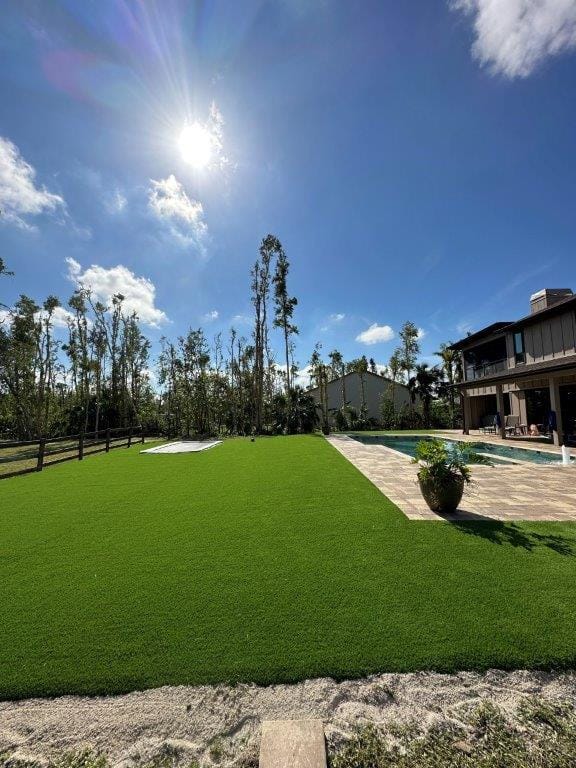
A residential lawn may serve as a visual landscape, family gathering area, pathway between outdoor spaces, or an active backyard. The layout should account for expected foot traffic, surrounding landscaping, existing hardscape, drainage paths, and how the homeowner wants to use the space after installation.

Pet Areas and Dog Runs
Pet-use areas require additional attention to cleaning access, repeated traffic, water movement, and how the surface will be maintained. The installation should be planned around the actual location and intended use rather than assuming every artificial grass system will perform the same way in a pet environment.

Pool Surrounds and Outdoor Living Areas
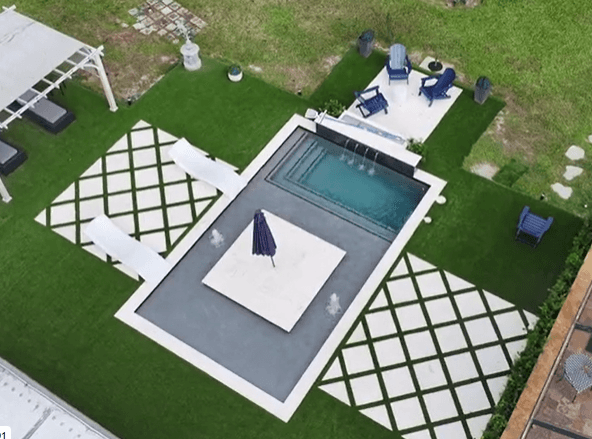
Synthetic turf can be incorporated around suitable pool and outdoor living areas to create a defined landscape transition between turf, decking, pavers, patios, and other features. Water exposure, finished elevations, drainage, borders, and transitions should be considered during planning.

Commercial and High-Traffic Spaces
Commercial properties may place different demands on synthetic turf than a private lawn. Entry areas, shared outdoor spaces, hospitality properties, recreation areas, and other frequently used spaces may need planning around traffic patterns, appearance, access, cleaning, and surrounding infrastructure.

The best result comes from matching the turf system and installation method to the property instead of selecting a surface based only on color or appearance.
Why Property Owners Consider Synthetic Turf in South Florida
Synthetic turf can change how a lawn or outdoor space is maintained and used. It does not eliminate every maintenance responsibility, but it can remove several routine tasks associated with maintaining living grass.
Some practical reasons property owners consider synthetic turf include:
- No routine mowing of the synthetic surface: Artificial grass does not continue growing after installation.
- Consistent visual coverage: Turf can provide a uniform landscape appearance in areas designed for synthetic surfaces.
- Fewer muddy or worn grass patches: Properly planned synthetic areas can replace locations where living turf struggles under repeated traffic.
- Flexible outdoor applications: Turf may be incorporated into lawns, pet zones, pool surroundings, recreation spaces, and other suitable areas.
- Custom property integration: Layouts can be planned around borders, pavers, walkways, planting areas, patios, and other outdoor features.
The decision should still be based on the property, budget, intended use, local conditions, and maintenance expectations. Synthetic turf is an alternative surface system, not a universal replacement for every natural landscape.


Where Synthetic Turf Can Be Used
The same artificial grass layout should not be copied across every property. Different applications place different demands on the surface, supporting base, drainage plan, edges, and surrounding landscape.
Common applications for synthetic turf in South Florida include:
- Front and backyard lawns for defined residential landscape areas and outdoor living spaces.
- Pet-use areas where cleaning access, traffic, and drainage need to be considered during planning.
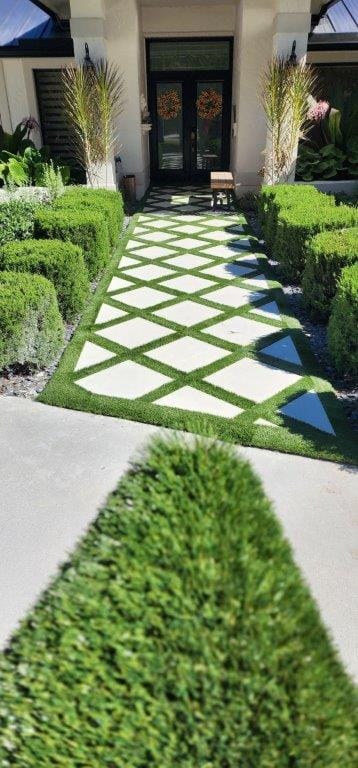
- Pool and patio surroundings where turf must transition carefully into existing hardscape and water-adjacent areas.
- Commercial landscapes that may experience higher traffic or require consistent presentation across shared outdoor areas.
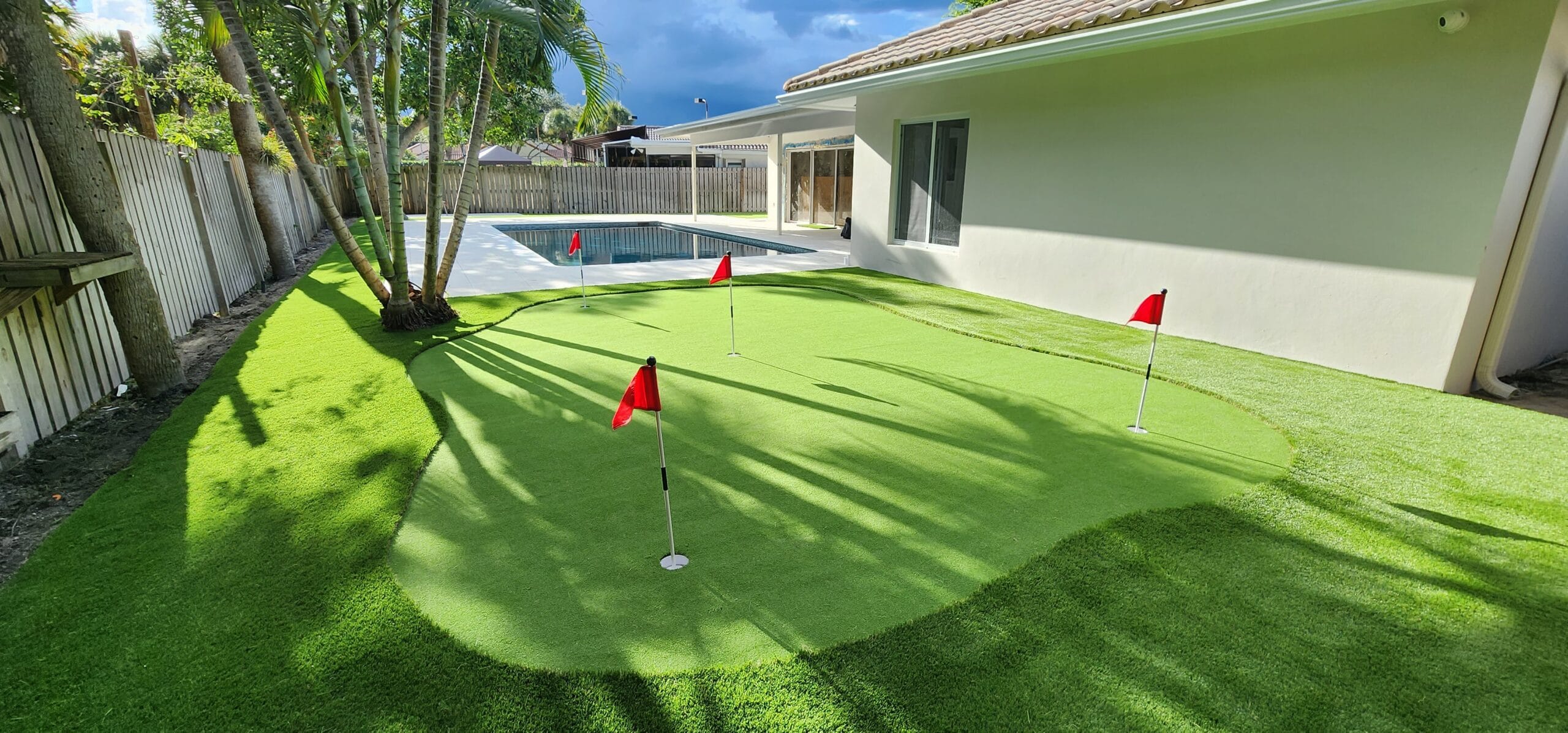
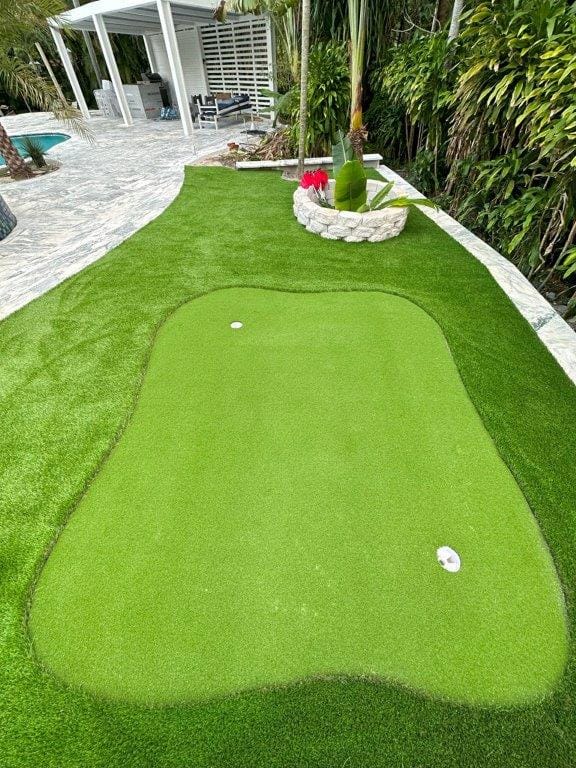
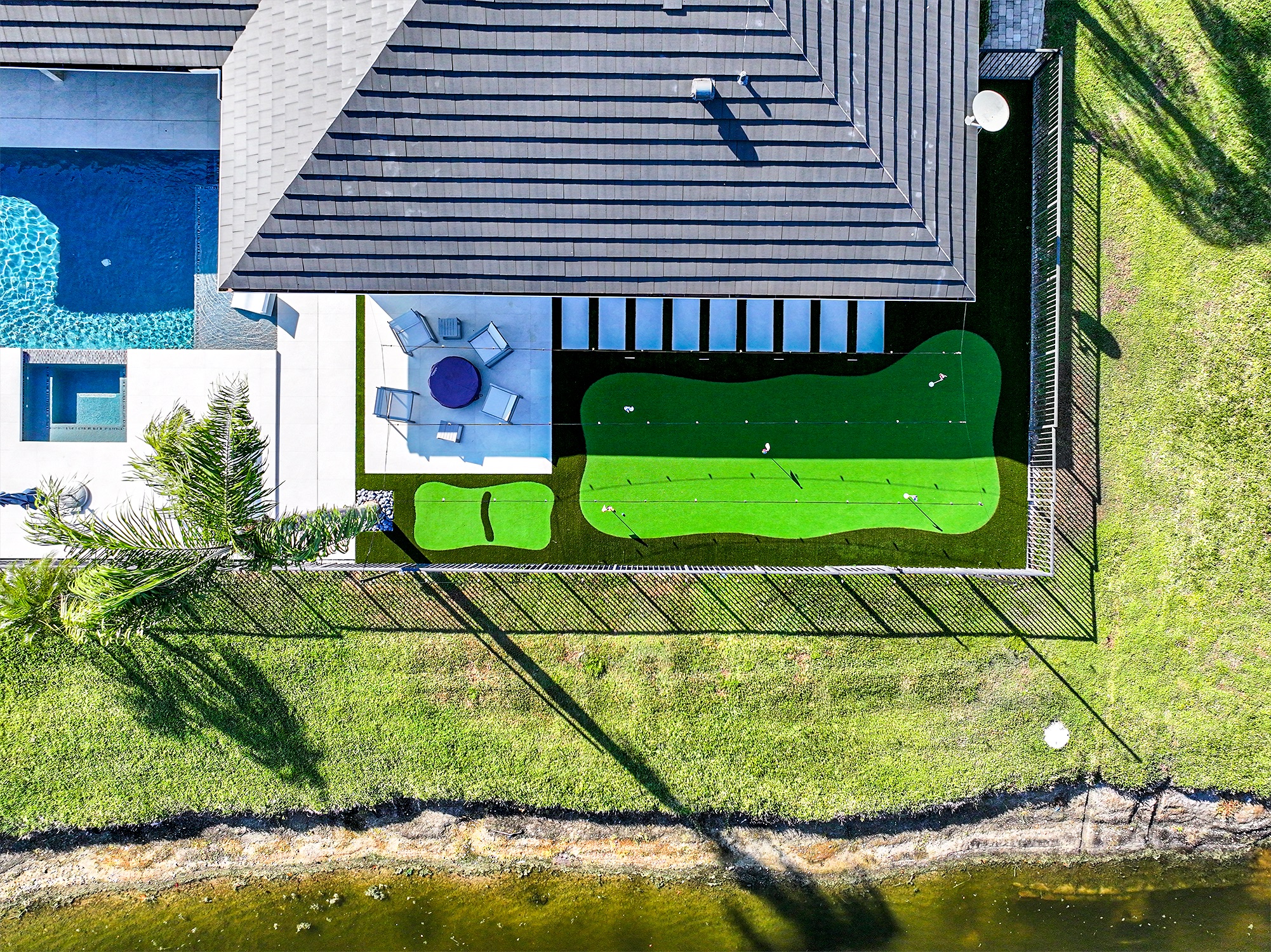
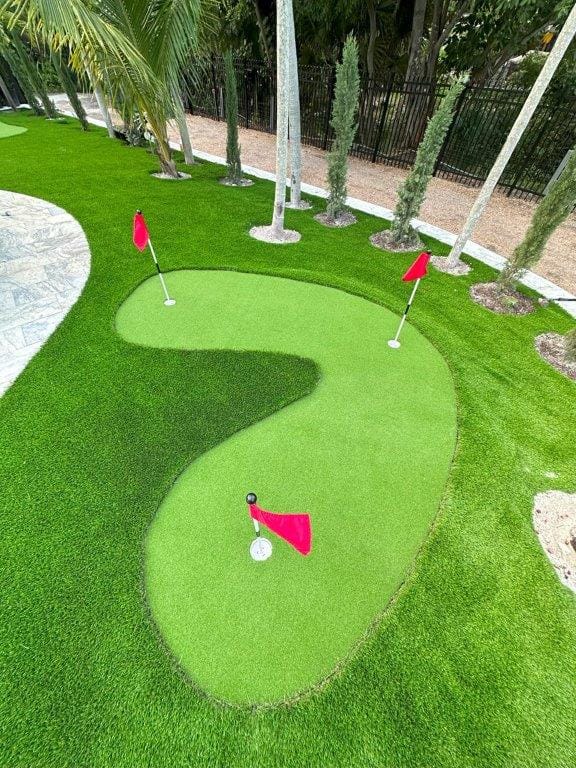
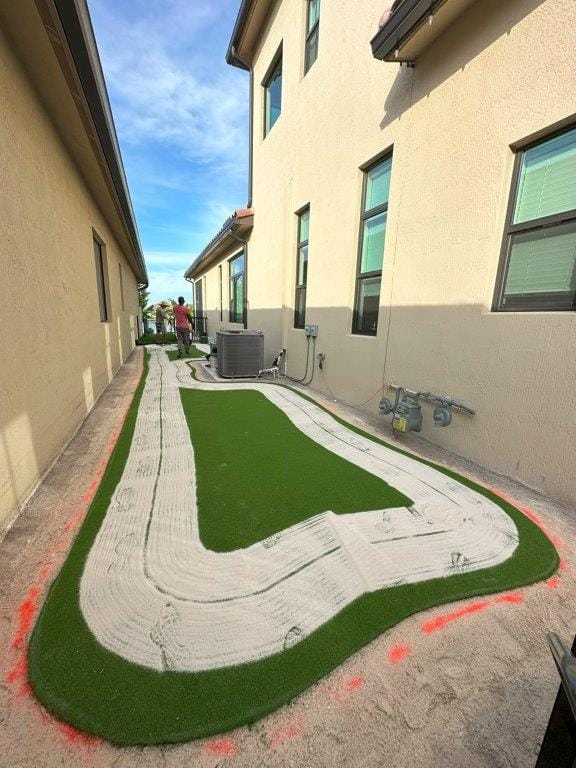
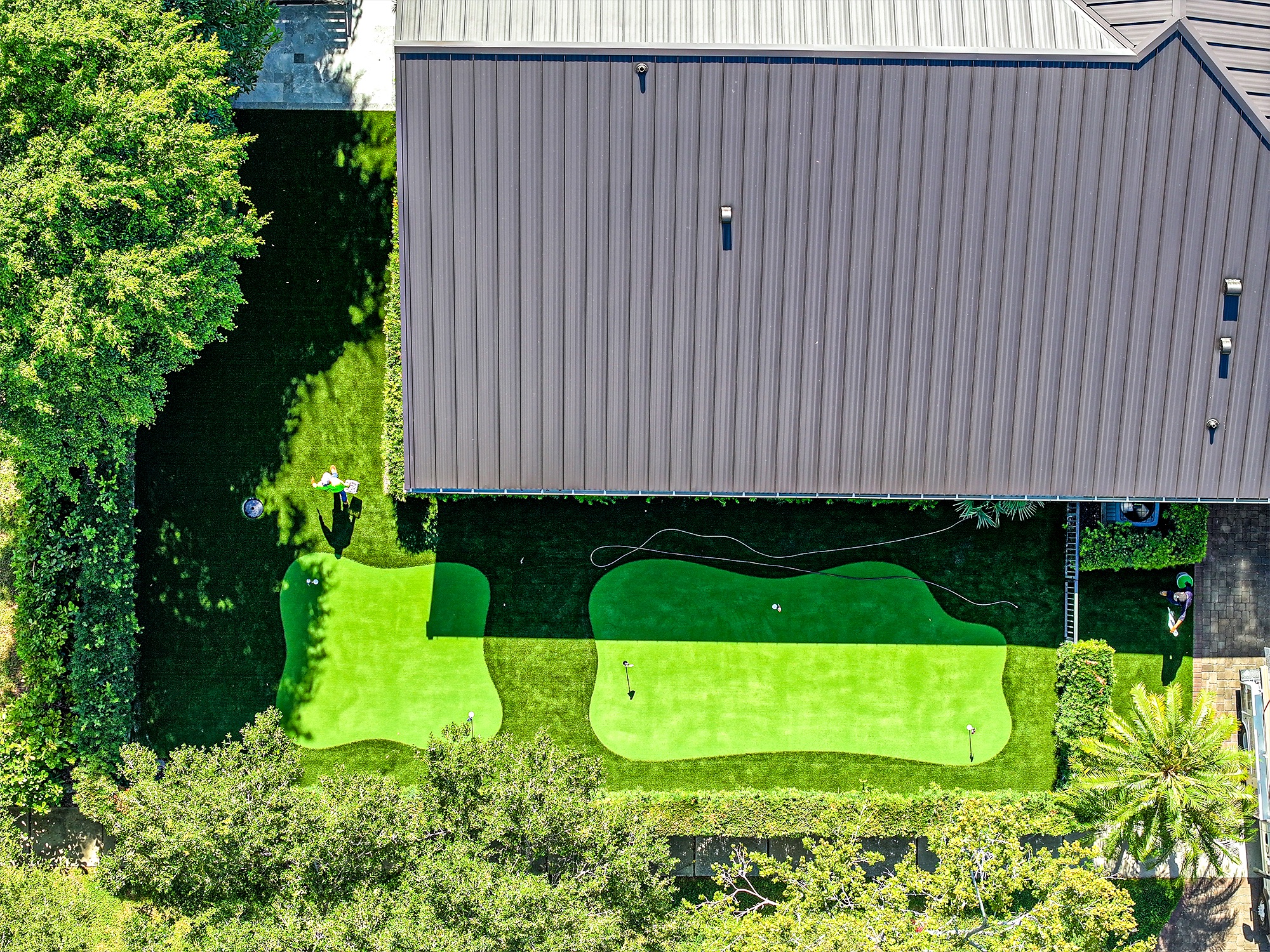
- Recreation and putting-green areas where the intended activity can influence layout, surface selection, contours, and surrounding features.
Before installation begins, the intended use should be clear. That allows the project plan to address the conditions that actually matter for that particular space.
Why the Base and Drainage Plan Matter
as Much as the Turf
The artificial grass you see after installation is only one part of the finished system. What happens underneath it can be equally important. Existing soil or surface conditions, elevation, grading, base preparation, compaction, drainage paths, borders, and nearby hardscape all influence how the area functions after installation. Water must have an appropriate path through or away from the installed area based on the specific site conditions. A property with low spots, existing drainage problems, pool decking, nearby drains, pavers, or uneven ground may require a different preparation strategy than a relatively open lawn. This is why site evaluation should happen before the final turf layout is determined. The objective is not simply to make the surface look finished on installation day, but to plan the supporting structure around the realities of the property.
Our Clients Reviews
REVIEWS
4.9


How Synthetic Turf Installation Works
A professional installation should move from understanding the property to preparing, installing, and finishing the surface around its intended use.
01 — Understand Your Space and Intended Use
The process starts by understanding where you want turf and how you plan to use the finished area. A backyard, pet space, commercial landscape, pool surround, or recreation area can require different planning decisions, so intended use should guide the project.


02 — Evaluate the Existing Site
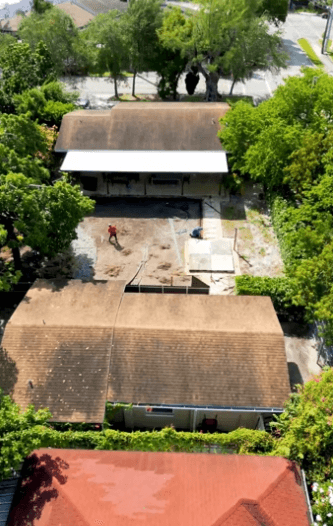
The existing ground, slopes, surrounding structures, transitions, access points, and visible drainage conditions should be reviewed before installation planning begins.Problem areas can then be identified before preparation starts.
03 — Plan the Turf Layout and Drainage Approach
Measurements and site conditions help determine the proposed turf layout, borders, seams, transitions, and preparation requirements. Water movement and existing elevations should also be considered during planning.


04 — Prepare and Build the Base
The installation area is prepared according to its existing condition, project requirements, planned elevation, and surrounding surfaces. Proper preparation creates the foundation for the remaining installation work.
05 — Install, Secure, and Finish the Turf
The turf is positioned, cut, joined, secured, and finished according to the layout and requirements of the specific project. Edges, transitions, seams, surface appearance, and applicable infill or finishing details are addressed before the project is completed.

Every property is different, so individual installation steps can vary depending on existing conditions, intended use, drainage requirements, and surrounding features.
What to Consider Before Choosing a Synthetic Turf System
Choosing artificial grass based only on how the sample looks can overlook important project requirements. A better decision considers how the surface will function after installation.
Before selecting a system, consider:
- Intended use: A decorative front lawn, pet area, recreation space, and commercial landscape can require different characteristics.
- Expected traffic: Consider how many people or pets will regularly move across the area and where traffic will be concentrated.
- Existing surface and site condition: Soil, old grass, hard surfaces, slopes, low areas, and existing improvements can affect preparation.
- Drainage and water movement: Review how water currently moves through the property and whether existing problem areas need attention.
- Cleaning and maintenance requirements: Think about leaves, dust, pet waste, surrounding trees, nearby landscaping, and how the area can be accessed for routine care.
The most appropriate turf solution is the one that fits the property and application rather than simply matching a general product description.


Planning Synthetic Turf for South Florida Heat, Rain, and Site Conditions
South Florida conditions make property-specific planning especially important. Rainfall, direct sunlight, existing grades, surrounding hardscape, and repeated outdoor use can affect how a turf area should be designed and maintained. Before installation, the property should be evaluated as a complete outdoor environment rather than treating the artificial grass as an isolated surface.
Important considerations include:
- Direct sun exposure: Synthetic surfaces can become hot in direct sunlight, so sun exposure and intended use should be considered when planning the area.
- Drainage and grading: Water movement depends on more than the turf backing. Site grade, base conditions, existing drainage, and surrounding elevations also matter.
- Existing soil or surface: Preparation requirements may change depending on whether the project begins with soil, grass, old landscaping, or another surface.
- Pool and water-adjacent locations: Transitions, elevations, drainage points, and the surrounding hardscape should be reviewed carefully.
- Cleaning and maintenance access: The finished space should remain accessible for debris removal, rinsing when appropriate, and other routine surface care.
South Florida receives substantial seasonal rainfall, making water movement an important planning issue for outdoor projects. At the same time, strong direct sun can raise synthetic-surface temperatures. Those conditions make realistic site assessment more useful than broad claims about turf performance.
Different Spaces Require Different Turf Decisions
Two properties can use synthetic turf for completely different reasons. That is why turf selection and installation planning should follow the application rather than using one standard approach everywhere.
Backyard and Decorative Lawn Areas
Residential turf may need to work around landscaping, patios, walkways, outdoor furniture, play areas, and other features. Layout, appearance, borders, traffic patterns, and transitions all become part of the design. A backyard used frequently by a family may also need a different plan from a front lawn designed primarily for visual presentation.

Pet-Use Areas
Pet areas require practical planning around repeated traffic and cleaning. Drainage conditions, access for rinsing or cleaning, surrounding borders, and the way waste will be managed should be discussed before installation. Pet owners should also understand that regular cleaning remains part of maintaining a frequently used synthetic surface.

Pool and Outdoor Living Spaces
When synthetic turf meets a pool deck, patio, pavers, walkway, or outdoor living area, the transition should be planned rather than treated as an afterthought. Existing elevations, water movement, borders, furniture placement, and how people move through the area can all influence the layout.

Commercial and Recreational Areas
Commercial landscapes and recreation areas may experience concentrated foot traffic, scheduled activities, furniture, equipment, or repeated public use. Planning should consider how traffic moves through the area, how the surface can be cleaned, and how the turf connects with access points and other site features.

Matching the project to its real-world use creates a more useful planning process than treating synthetic turf as a single solution for every outdoor space.
Why Work With DLS Turf Courts
for Your Turf Project?
DLS Turf Courts provides artificial turf and grass installation for outdoor spaces in South Florida, including residential lawns, commercial landscapes, pet areas, pool surroundings, putting greens, recreation spaces, and athletic-court surroundings. The planning process considers the property as a complete space. That means looking at intended use, measurements, site condition, drainage, layout, borders, transitions, and surrounding features before determining how the turf should be installed. If your project includes a more customized layout, you can also explore DLS Turf Courts’ custom turf design and installation options. For golf-focused outdoor spaces, learn more about putting green installation in South Florida.
Plan Your South Florida Synthetic Turf Project
A better turf project starts with understanding your property before deciding on the final surface. If you are considering Synthetic Turf Installation of South Florida, DLS Turf Courts can review the space, intended application, existing condition, and design goals to help determine the appropriate project approach. mWhen contacting the team, it helps to share your property location, project type, approximate area, intended use, current surface condition, design goals, and preferred timing. These details provide a clearer starting point for evaluating the site and discussing the installation.
Contact DLS Turf Courts to discuss your synthetic turf project and request an estimate.
Phone: +1 561-245-0721
Email: dls@dlsturfcourts.com
Frequently Asked Questions
Yes, drainage should be considered when planning a synthetic turf project, but the turf surface is only part of the drainage system. Existing grade, base preparation, soil or substrate conditions, nearby drains, hardscape, and the way water currently moves through the property can all affect the final approach. South Florida’s seasonal rainfall makes site-specific water planning particularly important.
Synthetic turf can become significantly hotter than living grass when exposed to direct sunlight. The amount of heat can vary with surface materials, weather, time of day, shade, and other conditions. Sun exposure and the intended use of the space should therefore be considered before selecting where and how synthetic turf will be installed.
Maintenance depends on the location and how the area is used. Typical care can include removing leaves and debris, cleaning spills, dealing with pet waste, rinsing when appropriate, and brushing or grooming higher-traffic areas when needed. Synthetic turf eliminates mowing of the artificial surface, but it should not be described as maintenance-free.
Project size, existing ground conditions, site preparation, grading or drainage requirements, turf application, property access, borders, curves, transitions, and surrounding hardscape can all affect cost. A site-specific estimate provides more useful information than applying one generic price to every property.
Synthetic turf may be incorporated into suitable poolside and outdoor living spaces. The project should account for existing pool decking, elevations, drainage, borders, water exposure, and the transition between the turf and surrounding surfaces.
Pet owners should consider traffic, cleaning access, drainage conditions, waste removal, odor management, and how frequently the area will be used. The installation plan should reflect the actual pet-use environment rather than relying only on a general turf product description.
Existing ground conditions can influence excavation, grading, base preparation, compaction, drainage planning, and finished elevation. A flat, stable area may require a different preparation approach from a location with low spots, uneven ground, old landscaping, or drainage issues.


