Athletic Court Construction in Florida
A professionally built athletic court starts with more than choosing a surface and adding game lines. The site, court layout, base preparation, drainage, playing surface, equipment, and long-term use all need to work together as one complete system. DLS Turf Courts provides athletic court construction in Florida for residential properties, commercial facilities, schools, HOAs, community spaces, and recreational projects. Each court is planned around the available space, intended sport, expected usage, and the features the property owner wants to include. From a private backyard basketball court to a custom multi-sport facility, our approach focuses on creating a functional outdoor athletic space that fits both the property and the way people intend to use it.
Custom Athletic Court Construction for Residential & Commercial Projects
No two athletic court projects are exactly the same. A residential backyard court may prioritize family recreation and flexible use, while a commercial or community facility may need a larger court layout designed for regular activity and multiple users. Our custom sports court construction approach considers the purpose of the court before the physical construction begins. Court dimensions, site conditions, base requirements, drainage, court surfacing, equipment, fencing, and lighting can all influence the final design. For projects requiring a complete solution, turnkey sports court construction can bring planning, site preparation, installation, surface work, game markings, and finishing features together within one coordinated project.
Residential Backyard Athletic Courts
A backyard athletic court can create a dedicated area for exercise, practice, family recreation, and competitive play without leaving the property. A residential court may be designed around one primary sport or configured as a flexible recreational space. Depending on the project, homeowners may consider:
- The amount of available outdoor space
- The primary sport or activities
- Single-sport versus multi-sport use
- Court access and surrounding space
- Fencing or containment
- Lighting for evening use
- Nets, hoops, and other court equipment
- Future maintenance requirements
The goal of residential sports court construction is not simply to fit a court into the yard. The layout should work naturally with the property and support how the family expects to use the space.


Commercial, School, HOA & Community Courts
Commercial athletic facilities often serve more people and may require a different planning approach. Schools, HOAs, recreation centers, parks, community facilities, and other commercial properties may need an athletic court that supports frequent use, organized recreation, or several activities within the same area.
During commercial sports court construction, the design can account for user flow, court configuration, sports equipment, surface requirements, access around the playing area, fencing, lighting, and long-term upkeep. This allows the final recreational facility to serve its intended users instead of simply functioning as an open paved area.
Types of Athletic Courts We Build
Before selecting materials or planning construction, the most important decision is understanding what the court needs to support. Some clients want a dedicated court built around one sport. Others prefer a more versatile athletic space where several games and recreational activities can take place.

Pickleball, Tennis & Basketball Courts
Dedicated sport courts allow the playing area, court markings, equipment, and layout to be planned around a specific activity. Our pickleball court construction in Florida can include a carefully planned playing surface, court lines, net system, surrounding space, drainage considerations, and other features required for comfortable use. For clients planning other dedicated playing spaces, DLS Turf Courts also provides tennis court construction in Florida and basketball court construction in Florida. Each sport has different layout, equipment, surface, and game-line requirements that should be considered during the design.
Instead of treating every sports court construction project the same way, the design should reflect how the sport is actually played and how the property owner expects to use the facility.

Multi-Use & Multi-Sport Courts
A multi-purpose court can be a practical option when one space needs to support several activities. With thoughtful multi-sport court construction, different game markings and compatible equipment can be incorporated within one planned athletic surface. For example, a multi-sport court may support combinations of basketball, pickleball, tennis practice, volleyball, or general recreation depending on the available space and overall design. The biggest advantage is flexibility.
Rather than dedicating separate areas to every sport, a multi-sport court can make better use of the available property while still giving players a clearly organized recreational space.
Our Athletic Court Construction Process
A successful court depends on the work completed before the final playing surface becomes visible. Professional sports court installation connects several construction stages so that the site, base, drainage, surface, markings, and equipment work together rather than being treated as unrelated tasks.

Site Planning, Grading, Base & Drainage
The process begins by understanding the site and determining how the athletic court should fit within the property. Site preparation may involve evaluating the proposed court area, establishing the layout, preparing the ground, completing necessary grading, and developing an appropriate court base.
Drainage also needs to be considered as part of outdoor court planning. Water should be managed as part of the overall site design rather than addressed only after the playing surface has been installed.
Depending on the individual project, preparation may include:
- Evaluating the available construction area
- Establishing the court layout and orientation
- Preparing and grading the site
- Building the required court base
- Planning drainage and water movement
- Preparing surrounding areas for fencing or equipment
Careful court base preparation creates a stronger foundation for the surfacing and finishing stages that follow.
Surfacing, Court Markings & Equipment Installation
Once the underlying court area is prepared, attention moves to the playing surface and final court features. The court surfacing stage creates the area athletes actually interact with during play. Surface coatings, game lines, equipment placement, fencing, and lighting should all follow the original court plan.
Depending on the project, finishing work may involve professionally applied game markings, net systems, basketball hoops, sports fencing, lighting, or other court accessories. For a multi-purpose facility, line striping and court markings should remain easy to understand so players can identify the boundaries for each activity without making the surface unnecessarily confusing.
A coordinated installation process helps the finished athletic court look intentional rather than like several independent features added at different times.


Sports Court Base & Surface Options
After deciding what type of court to build, property owners often need to choose an appropriate base and playing surface. The right configuration depends on the intended sport, existing site conditions, expected usage, maintenance preferences, and overall court design.
Concrete & Asphalt Court Bases
Concrete and asphalt are common base materials considered for hard-surface athletic courts. However, choosing a base should not be based only on the material name. The site, grading, drainage plan, intended surface system, and long-term use of the facility should all be evaluated together. A properly planned base creates the foundation for the athletic surface, court coating, game markings, and other finishing elements installed above it.
Before construction begins, it is useful to consider how the base will interact with:
- The selected playing surface
- Drainage around the court
- Outdoor exposure
- Intended sport
- Expected level of use
- Future repair and maintenance
This helps create a more complete court system rather than treating the base and surface as separate decisions.
Acrylic Court Surfacing & Surface Coatings
The playing surface influences how the finished court feels and performs during everyday use. Depending on the project, an acrylic court surface or another suitable sports-surface system may be considered over the prepared base. Court surfacing can also involve surface coatings and finishing layers that create the final appearance and playing area.
Surface selection should consider the intended sport, expected use, outdoor conditions, maintenance requirements, and the type of base underneath. A professional sports surface contractor should therefore evaluate the full construction system rather than recommending a surface based only on colour or appearance.
Custom Athletic Court Construction for Residential & Commercial Projects
A sports surface should be evaluated by how it performs after installation, not simply how it looks on completion day. Factors such as surface durability, traction, regular player use, outdoor exposure, and maintenance expectations can all influence the long-term experience of the court. For heavily used athletic facilities, the surface should support frequent activity while remaining appropriate for the intended sport. For a residential backyard court, comfort, versatility, appearance, and maintenance may carry more weight. Matching the playing surface to the actual use of the facility helps create a more practical long-term result.
Our Project Portfolio
Our Clients Reviews
REVIEWS
4.9


Sports Court Resurfacing, Repair & Maintenance
Not every worn or aging court needs complete reconstruction. An existing athletic court may need targeted sports court repair, broader resurfacing, or regular maintenance depending on its current condition. Understanding the difference between these services can help property owners avoid choosing more extensive work than necessary.
Court Resurfacing & Restoration
Sports court resurfacing focuses on renewing an existing playing surface when the court does not necessarily require complete reconstruction. A resurfacing project may address worn coatings, faded appearance, outdated game lines, surface deterioration, or other issues affecting the usability and presentation of the court. Before resurfacing begins, the existing surface and underlying condition should be evaluated so visible problems are not simply covered without understanding their cause.


Crack & Surface Repair
Localized deterioration may be better suited to targeted court repair. Cracks, damaged surface areas, worn sections, or isolated defects can sometimes be addressed without resurfacing the entire facility. However, repeated or widespread damage may indicate that a broader court restoration or rehabilitation approach should be considered. The important step is identifying the condition of the existing court before deciding whether repair, resurfacing, or more extensive work is appropriate.
Ongoing Court Maintenance
Routine sports court maintenance helps property owners keep an eye on the condition of the playing surface, game markings, drainage, equipment, and surrounding court area. Maintenance needs can vary depending on the surface system, level of use, outdoor environment, and type of athletic facility. Keeping the court clean and addressing visible issues before they become larger problems can make future maintenance and repair planning easier.


From Athletic Courts to Custom Turf & Putting Greens in Florida
Athletic court construction is one part of the outdoor surface work available through DLS Turf Courts. Property owners planning a larger backyard, commercial, or recreational upgrade can combine a court project with other surfaces designed around how the property will actually be used.
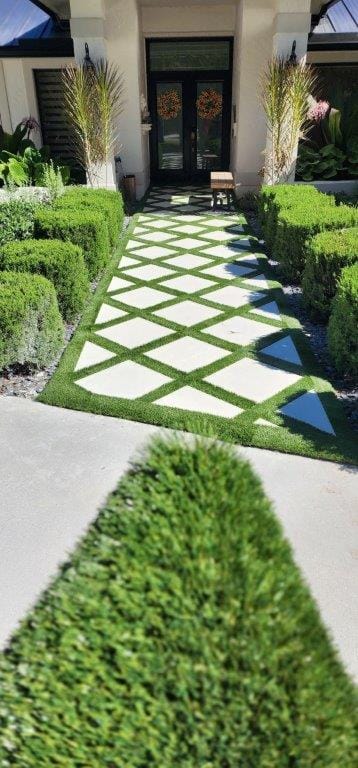
Our artificial grass installation services can be used for residential lawns, commercial spaces, play areas, pet areas, and recreational surroundings where a low-maintenance turf surface is preferred. Custom layouts can also integrate turf around patios, pool areas, walkways, court borders, and other outdoor features.
For properties that need a more individualized layout, our custom turf design and installation service focuses on creating outdoor areas around the available space, daily use, drainage needs, landscape features, and desired appearance. This can help connect athletic surfaces with the surrounding property instead of treating each area as a separate project.
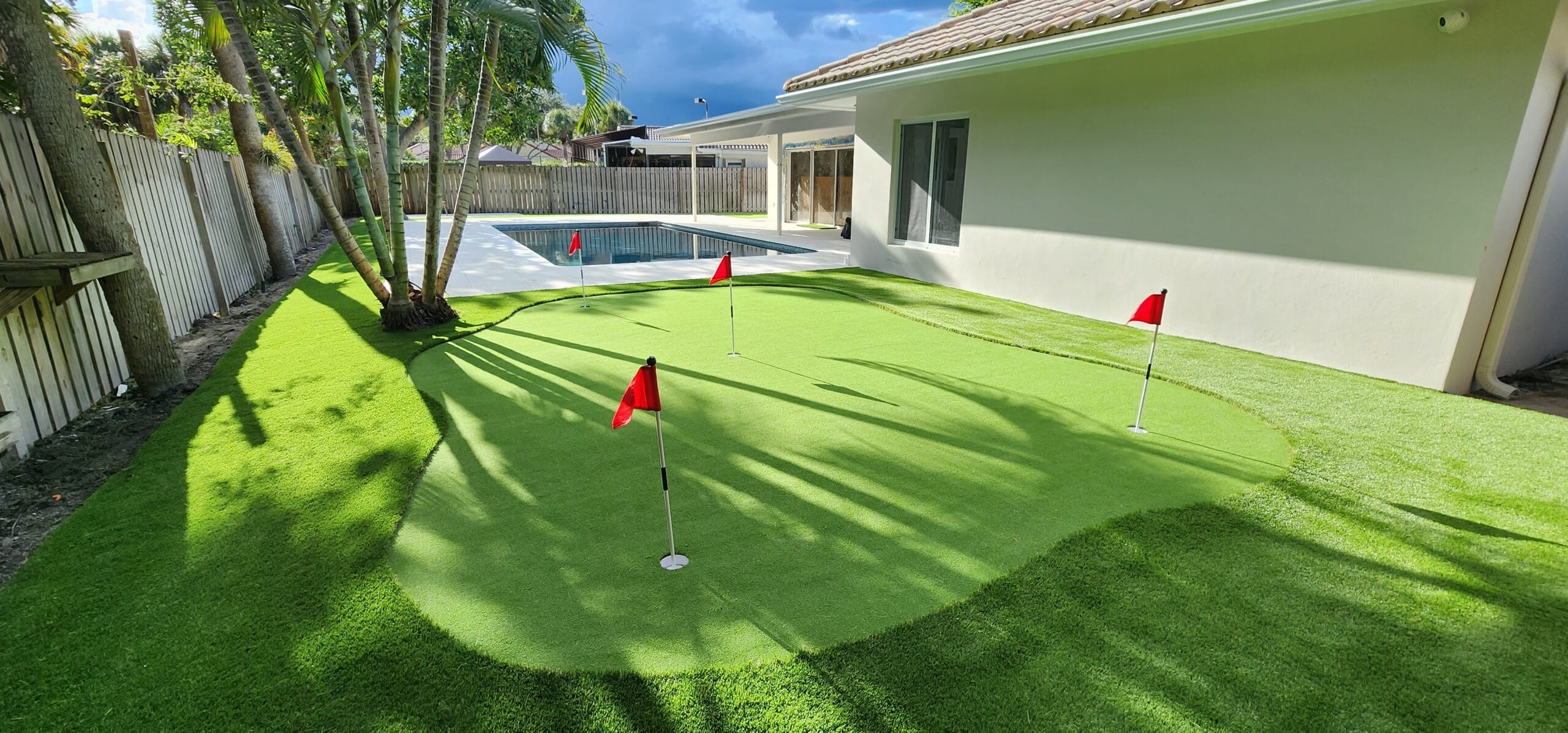
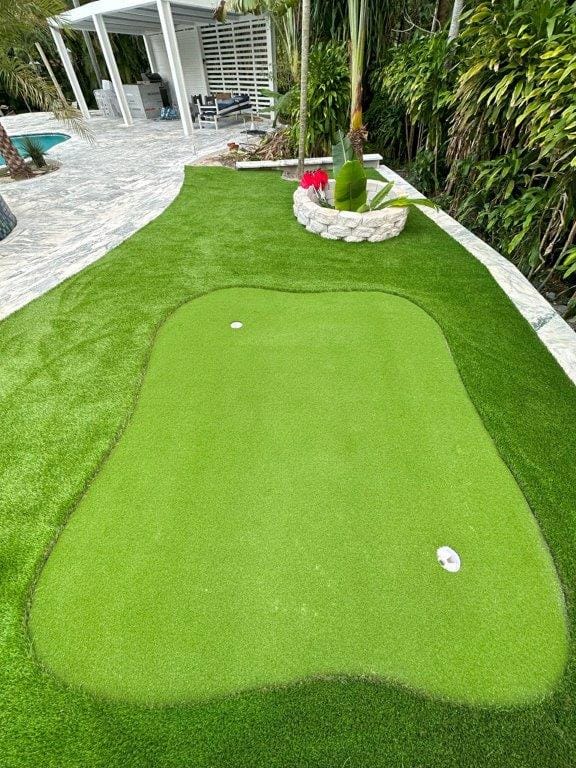
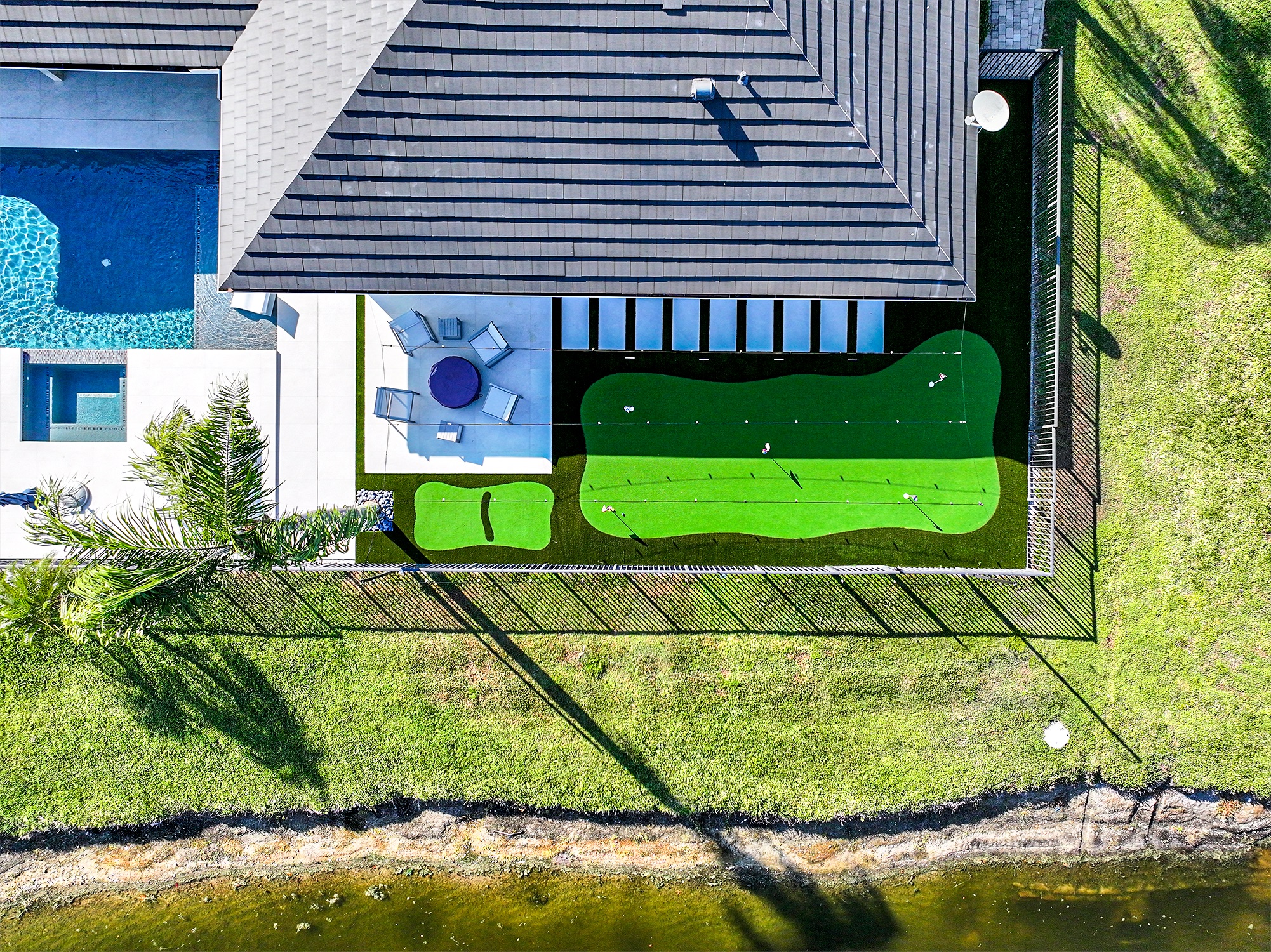
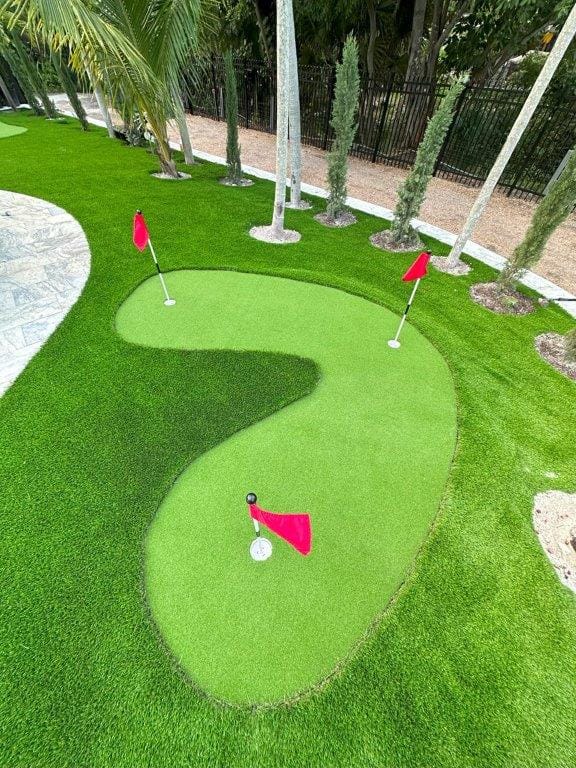
Golf-focused outdoor spaces are another option. A custom putting green installation can create a dedicated practice and recreation area for homeowners, commercial properties, or larger landscape projects. Together with pickleball, tennis, basketball, padel, and multi-use court construction, these services allow DLS Turf Courts to plan outdoor spaces around both recreation and everyday property use rather than limiting the project to a single surface.
Why Hire a Professional Sports Court Construction Contractor?
Building an athletic court involves more than installing a flat surface. A complete project may require site preparation, grading, base work, drainage planning, sports surfacing, line marking, fencing, lighting, and equipment installation. These elements need to be coordinated so one part of the project does not interfere with another.
An experienced sports court construction contractor can help property owners evaluate the complete project rather than making isolated decisions about individual features.
A professional planning process should help clarify:
- Whether the proposed location is suitable for the intended court
- How the court should fit within the available space
- Which base and surface options match the project
- How drainage should be incorporated
- Whether a dedicated or multi-sport design is more appropriate
- Which equipment and accessories are needed
- How future maintenance may affect the court
This becomes especially important for outdoor sports court construction, where the court is expected to function as a complete recreational facility over time. DLS Turf Courts approaches athletic court projects by considering the site, intended use, playing surface, and supporting court features together instead of treating construction as a surface-only service.

Plan Your Athletic Court Project in Florida
The best athletic court is one designed around the property, the players, and the activities the space needs to support. Whether you are planning a residential backyard court, commercial athletic facility, pickleball court, basketball court, tennis court, or multi-sport recreational space, proper planning helps connect the court design, base, drainage, playing surface, markings, and equipment into one complete project.
DLS Turf Courts provides athletic court construction in Florida, along with sports court installation, court resurfacing, repair, maintenance, and custom multi-use court solutions. If you are planning a new athletic court or improving an existing sports surface, contact DLS Turf Courts to discuss your property, project goals, and preferred court setup.
Faq
Yes. A court can be designed for several sports when the available space, game markings, equipment, and layout are planned together. A multi-use design may combine activities such as basketball, pickleball, tennis practice, volleyball, or general recreation. The final configuration should prioritize the sports the property owner expects to use most often.
A turnkey sports court construction project can combine multiple stages of development within one coordinated plan. Depending on the individual project, this may include site planning, preparation, grading, base construction, drainage considerations, sports surfacing, court markings, fencing, lighting, and equipment installation. The final scope should always be based on the actual property and project requirements.
Repair is generally more appropriate when problems are limited to specific areas of the court. Resurfacing may make more sense when wear, coatings, markings, or surface deterioration affect a larger portion of the playing area. If the problem appears to involve the base or wider structural condition, the court may require a more detailed evaluation before deciding on the appropriate solution.
Several elements can influence the scope of an athletic court construction project. The available space, site conditions, intended sport, court dimensions, base preparation, drainage, surface system, fencing, lighting, equipment, and whether the court is residential, commercial, or multi-use can all affect the final plan. For that reason, an athletic court should be designed around the individual property rather than a one-size-fits-all construction package.


